
By Shakhawat Ullah
13 Min Read
WooCommerce Dynamic Pricing vs BOGO: Which Promotion Strategy Fits Your Store?
It is Thursday afternoon, and your biggest sale weekend starts in two days. You have built a healthy margin into your catalog, and now you have to decide how to give some of it back.
One option rewards shoppers who buy more, scaling the discount automatically as their cart grows. The other hands them a second product for free the moment they add one to the cart.
That choice between Dynamic Pricing vs BOGO looks small, yet it quietly decides how many units you move, how much margin you keep, and whether your regulars learn to wait for your next promotion before buying anything.
In this guide, we’ll break down what each approach really is, how each one affects your numbers, and exactly when to reach for one over the other inside your WooCommerce store.
Let’s get started!
Understanding Dynamic Pricing vs BOGO
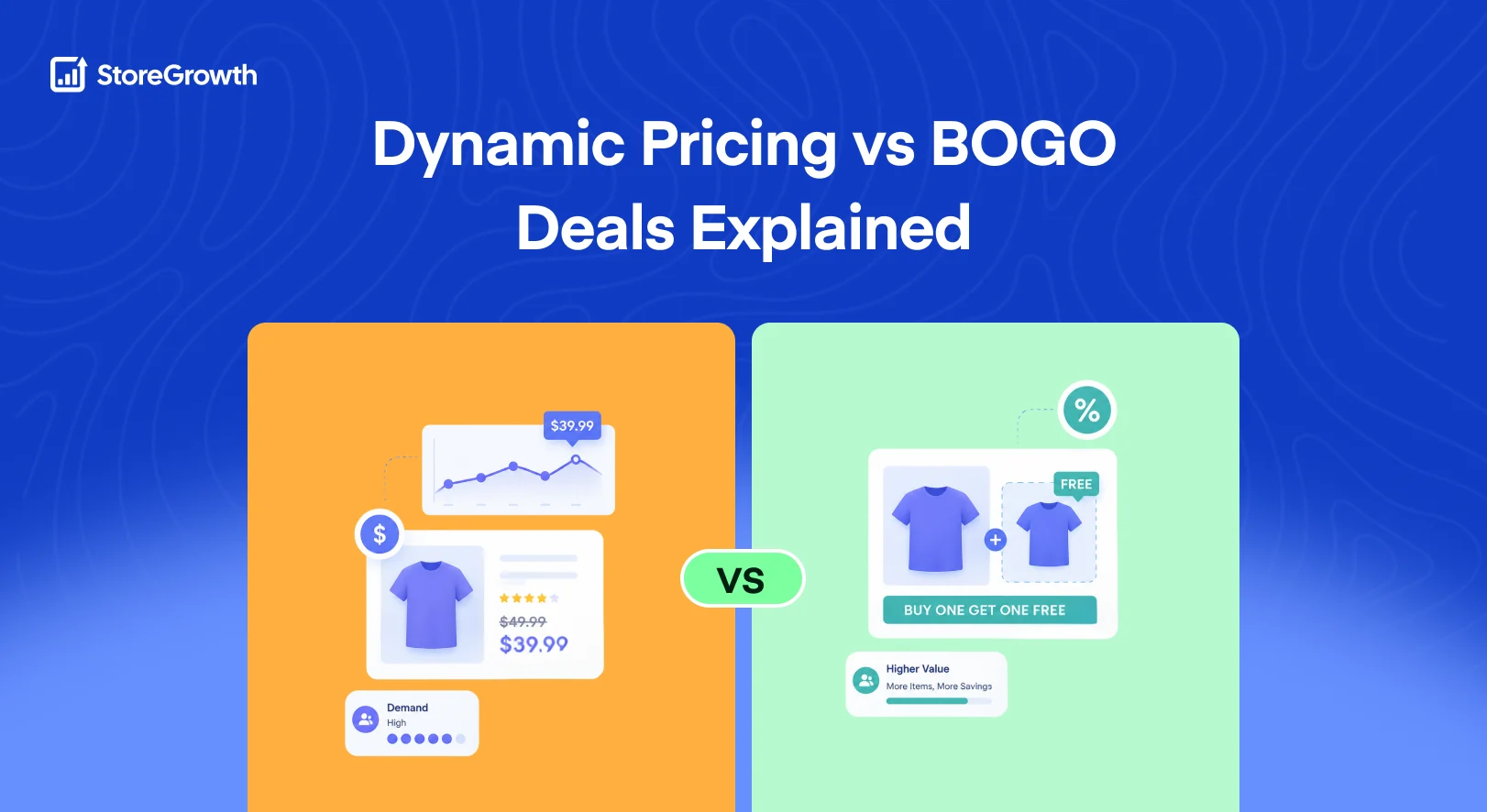
Go for dynamic pricing when you want a pricing system that adjusts on its own across quantities and customer types, and reach for BOGO when you want one loud offer that pushes shoppers to buy right now. Dynamic pricing works like a quiet set of rules running in the background of your store, while a BOGO deal works like a spotlight on a single campaign.
The difference between the two strategies is not really about discount depth. It is about whether you want an automated pricing engine or a single high-impact play.
Dynamic pricing tunes the price up or down based on conditions you define, so a wholesaler and a one-time shopper can see different numbers on the same product. BOGO keeps things blunt and emotional, because the word free does something to buyers that a percentage rarely matches.
Here is the quick frame before we go deeper into the WooCommerce side of each promotion strategy.
| Factor | Dynamic Pricing | BOGO |
|---|---|---|
| What it is | A set of rules that change price automatically | A single offer where buying one adds another free or cheaper |
| How the price changes | Scales by quantity, role, time, category, or cart total | Adds a free or discounted unit at a fixed trigger |
| Automation | Runs quietly and stays always on | Switched on for a campaign or season |
| Margin control | Fine-grained, you set the depth per rule | Blunt, the free unit is a fixed cost |
| Customer trigger | Feels fair and earned | Feels like a gift |
| Best suited for | Bulk buyers, wholesale, segmented pricing | Clearance, urgency, trial, volume |
What Dynamic Pricing Means for a WooCommerce Store
Dynamic pricing is a rules-based strategy where the price of a product changes automatically based on conditions you set, rather than staying fixed for every shopper.
Instead of one price for everyone, you decide who pays what and under which circumstances. The system then does the math at the cart level without you touching anything during the sale.
Most WooCommerce dynamic pricing setups fall into a handful of rule types:
- Quantity or tiered pricing, where the unit price drops as the cart count climbs (10 percent off at five units, 18 percent off at twenty).
- Role-based pricing, where logged-in members, resellers, or wholesale accounts see lower numbers than the public.
- Time-based pricing, where a scheduled rule turns a sale on and off without manual edits.
- Category pricing, where a whole collection moves together.
- Cart-total pricing, where crossing a spend threshold earns a better rate.
Picture a coffee roaster selling to cafes. A tiered rule gives 5 percent off at six bags, 12 percent off at twelve, and 20 percent off at twenty-four.
The cafe owner watches the savings grow and orders more to reach the next tier, which is exactly the behavior the rule was built to encourage.
Worth knowing before you plan anything: WooCommerce does not run this kind of tiered or role-based logic out of the box, so dynamic pricing always needs functionality added on top of the default coupon system.
What Is BOGO and Why Is It Different?
BOGO, short for Buy One Get One, is a promotion where purchasing a qualifying product automatically adds a second item for free or at a reduced price. It is a single offer rather than a pricing system, and that simplicity is the whole point.
A shopper does not have to calculate anything, because the value lands instantly the moment a second product appears in the cart at no extra cost.
The reason a BOGO deal often outperforms a numerically identical percentage discount comes down to how people read the word free.
In a study published in Marketing Science, researchers showed that demand jumps sharply when a price drops to zero, far beyond what the small change in value should predict. A free second unit feels like pure gain, while a percentage off feels like arithmetic.
We covered that behavior in depth in our breakdown of how BOGO compares to flat percentage coupons, so this guide stays focused on the dynamic pricing comparison.
There are certain types of BOGO deals that you must know of – Buy One Get One Free moves two identical units. Buy X Get Y adds a different complementary product for free. Buy 2 Get 1 Free pushes three units per order and recovers more margin, since the shopper funds part of the gift through their own larger basket.
How Dynamic Pricing vs BOGO Affects Your Margins
Dynamic pricing gives you a margin dial, while a plain BOGO offer swings a margin hammer. That single distinction explains most of the financial gap between the two strategies.
With tiered or role-based rules you choose the exact depth of every discount, so you can move extra units while still keeping a comfortable margin. A straight Buy One Get One Free is deeper by design, because you are giving away a full unit of stock.
The math is clearer with real numbers. Take a product priced at $40 with $16 in cost of goods, which leaves a 60 percent margin at full price.
| Scenario | Customer Pays | Units Moved | Revenue | COGS | Gross Profit | Gross Margin |
|---|---|---|---|---|---|---|
| Full price, 1 unit | $40 | 1 | $40 | $16 | $24 | 60% |
| Tiered dynamic pricing, 20% off at 2+ | $64 | 2 | $64 | $32 | $32 | 50% |
| Buy One Get One Free | $40 | 2 | $40 | $32 | $8 | 20% |
| Buy 2 Get 1 Free | $80 | 3 | $80 | $48 | $32 | 40% |
The tiered rule moves two units and still holds a 50 percent margin, which is why dynamic pricing suits stores that want to protect profit while nudging bigger baskets.
The plain BOGO is the thinnest at 20 percent, yet it is also the most magnetic offer on the shelf during a clearance push.
Structured BOGO like Buy 2 Get 1 lands in the middle at 40 percent, because the larger order partly pays for the free item. None of these is wrong.
They are simply tuned for different goals, which is the same logic behind matching the right offer to the right product page when you study the best WooCommerce upsell plugins for raising order value.
Which Strategy Your Customers Actually Respond To
Customers respond to BOGO with impulse and to dynamic pricing with calculation, and that emotional split should guide which one you pick.
A free product triggers a quick sense of gain, so BOGO shines when you want a fast yes from a casual shopper. Dynamic pricing reads as fair and earned, so it lands better with deliberate buyers who are already comparing quantities and totals before they commit.
Here is the honest caveat most promotion guides skip. The research on which approach converts better is genuinely mixed, and a lot of the eye-catching numbers online come from tools selling one side of the argument.
Stated preference and actual behavior often disagree, since people say they like clean percentage savings yet reach for the free item at checkout. Treat any single conversion statistic with healthy suspicion and test against your own store data.
A simple way to hold both ideas at once:
- BOGO is best for clearance, seasonal urgency, product trials, and lifting units on a hero product.
- BOGO is not best for high-ticket items, wholesale buyers, or single-SKU stores with no second unit to give.
- Dynamic pricing is best for bulk orders, member or reseller tiers, and steady margin-protected discounts.
- Dynamic pricing is not best for quick emotional pushes where a shopper needs an instant, obvious reason to act.
How to Choose Between Dynamic Pricing vs BOGO?
Choose based on the job you need done, not on which promotion feels more exciting this week. The decision gets easy once you name the goal first and let the goal point to the tool.
The table below maps the most common WooCommerce scenarios to the stronger fit so you can match strategy to situation in a few seconds.
| Your goal or store type | Better fit | Why it works |
|---|---|---|
| Clear slow-moving stock fast | BOGO | Moves two units per order and reads as a gift, not a markdown |
| Reward bulk and wholesale buyers | Dynamic pricing | Tiered rates let buyers calculate their own savings as quantity climbs |
| Price members or resellers differently | Dynamic pricing | Role-based rules handle each segment without manual coupons |
| Create urgency for a flash event | BOGO | One bold offer reads instantly and pairs well with a countdown |
| Win a first purchase from a new visitor | BOGO | A free second item lowers the risk of trying you for the first time |
| Discount while protecting margin | Dynamic pricing | You set the exact depth per rule and never give a full unit away |
| Lift order value on a single hero product | BOGO | Every order ships at least two units instead of one |
If your shortlist leans toward BOGO, StoreGrowth runs BOGO offers natively inside WooCommerce alongside countdown timers, a free shipping bar, and sales notifications, so the offer and the urgency around it live in one plugin.
For the tiered and role-based rows, you will want a dedicated dynamic pricing approach instead, since that rules engine is a different category of tool.
When to Use Dynamic Pricing and BOGO Together
The most profitable WooCommerce stores rarely treat this as Dynamic Pricing vs BOGO at all, because they layer both for different jobs across the calendar. Dynamic pricing runs quietly as the always-on baseline that rewards bulk and loyal buyers every day, while BOGO comes out for short, loud moments that need a spike in volume.
One protects your everyday margin, and the other creates the occasional event that gets people talking and clearing stock.
A realistic quarter might look like this. Tiered pricing stays live the whole time so wholesale and repeat customers always have a reason to size up their orders. Then a single weekend Buy One Get One Free event drops on a hero category, wrapped in a countdown timer and a free shipping bar to sharpen the urgency.
After the weekend, the BOGO switches off and the steady tiered rules carry the store again without any manual cleanup.
Frequently Asked Questions
Can I run dynamic pricing and BOGO at the same time on one WooCommerce store?
Yes, and many stores do exactly that. Dynamic pricing usually runs as an always-on baseline that rewards bulk and segmented buyers, while a BOGO deal switches on for short campaigns or seasonal pushes.
The two strategies serve different goals, so they rarely conflict. The main thing to watch is whether a single shopper can stack both on the same item, which you can prevent by scoping each rule to specific products or conditions.
Does BOGO eat more margin than a tiered percentage discount?
A plain Buy One Get One Free usually takes a deeper margin cut than a modest tiered discount, because you are giving away a full unit of stock rather than trimming the price.
A tiered dynamic pricing rule lets you set a shallower depth and still move extra units, which protects profit. Structured BOGO like Buy 2 Get 1 Free sits in between, since the larger basket helps fund the free item and lifts the blended margin.
Does WooCommerce handle dynamic pricing or BOGO out of the box?
No, the native WooCommerce coupon system covers only fixed amounts and percentage codes. It does not run tiered quantity pricing, role-based pricing, or automatic BOGO logic where a second item is added and zeroed in the cart.
Both strategies need functionality added on top of the default setup, which is why store owners reach for a dedicated promotion tool once they move beyond simple coupon codes.
How do I tell whether a BOGO or dynamic pricing promo actually worked?
Look past total revenue and check four numbers against a normal period. Track units per order to see if baskets grew, average order value to confirm the offer lifted spend, gross margin to make sure the discount did not erase your profit, and repeat purchase rate to catch whether you trained shoppers to wait for the next sale.
A promotion that raises units but crushes margin and trains discount-hunting is not really a win.
Which strategy is better for a small store with only a few products?
Smaller catalogs usually get faster results from BOGO, because a single clear offer is easier to merchandise than a layered rules system, and it works even with a handful of SKUs. Dynamic pricing pays off more once you serve distinct buyer types or sell in bulk.
If you are starting simple, StoreGrowth lets a small WooCommerce store launch BOGO offers and urgency tools without stacking several plugins to do it.
Wrapping Up
Dynamic pricing and BOGO are not rivals fighting for the same slot in your store. Dynamic pricing is the quiet rules engine that protects margin and rewards bulk and segmented buyers every day, while BOGO is the bold, emotional offer that clears stock and wins fast decisions when you need a spike.
The real skill is to understand which type of promotion works at what time, instead of defaulting to whatever you ran last time.
If you have decided BOGO belongs in your next campaign, it helps to run the offer and the urgency around it from one place. StoreGrowth bundles BOGO offers with countdown timers, a free shipping bar, and sales notifications for WooCommerce, and every plan is backed by a money-back guarantee, so you can compare the plans and test your next promotion strategy without committing blind.
Category:
Tags: